



















Before the COVID-19 pandemic, no vaccine had ever been developed in under four years – so hoping for one by the summer of 2021 seemed absurdly optimistic. But at the start of December 2020, a vaccine made by Pfizer with German biotech firm BioNTech became the first fully-tested immunization to be approved for emergency use.
The world was able to develop COVID-19 vaccines so quickly because of years of previous research on related viruses, faster methods of manufacturing vaccines, enormous sums of funding that allowed firms to run multiple trials in parallel, and regulators cutting red tape wherever possible.
The experiences of the past year have challenged our whole paradigm of what is possible in vaccine development. New ways of making vaccines have been validated by the COVID-19 response, which has also shown that the development process can be accelerated substantially without compromising on safety.
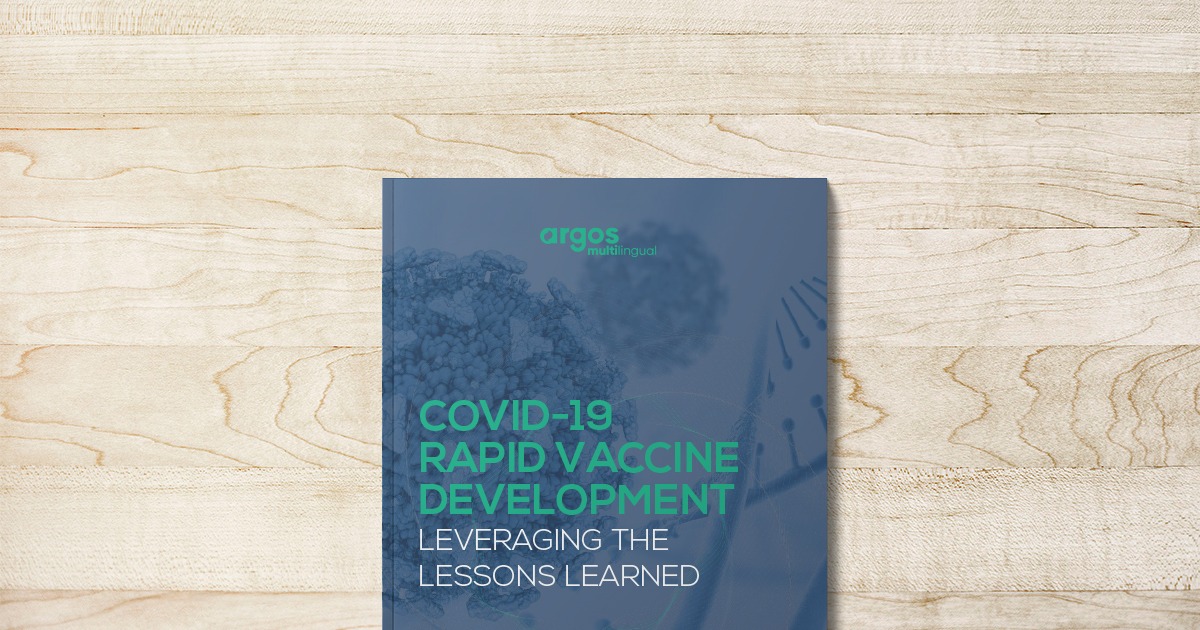
All this has exciting implications for the future, especially since the factors mentioned above can and likely will translate to other vaccine efforts. To learn more, download our article, “COVID-19 Rapid Vaccine Development – Leveraging the Lessons Learned.”
 Jose Cotes
10 min. read
Jose Cotes
10 min. read
Multimedia localization uses subtitles, dubbing, voice-over, and on-screen text to make video and audio content understandable in every language.

 Argos Multilingual
2 min. read
Argos Multilingual
2 min. read
Argos Multilingual has been included in The Forrester Wave: Localization Services, Q3 2026, an independent evaluation of the localization market.